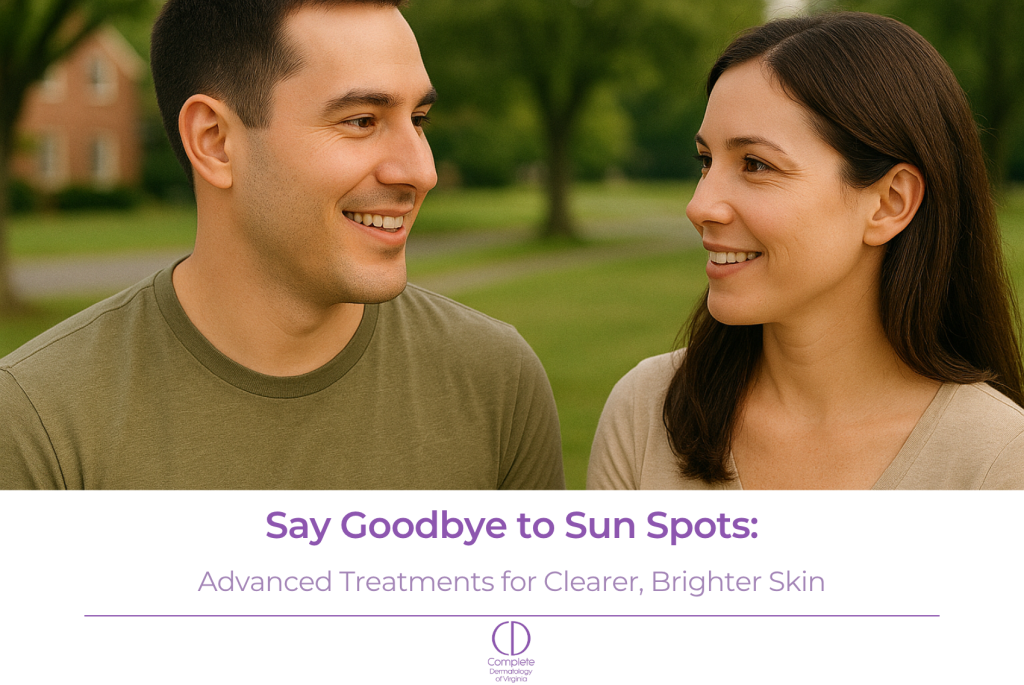
Sun spots—also known as liver spots or solar lentigines—are common signs of sun damage that appear as flat, brown patches on the face, hands, chest, or shoulders. While generally harmless, these spots can make skin appear older and uneven. At Complete Dermatology in Oakton, VA, our dermatologists offer safe and effective treatments to help fade and remove sun spots, restoring a more youthful, even-toned complexion.
Understanding Sun Spots
Sun spots develop over time due to prolonged exposure to ultraviolet (UV) radiation from the sun or tanning beds. UV exposure triggers an overproduction of melanin—the pigment that gives skin its color—leading to localized dark patches.
While anyone can develop sun spots, they are most common in individuals over 40 or those with fair skin who spend significant time outdoors without consistent sun protection.
Professional Treatments for Sun Spots
1. Chemical Peels
Chemical peels use specialized solutions to exfoliate the top layers of skin, encouraging new cell growth and revealing brighter, clearer skin beneath. Medium-depth peels with glycolic, trichloroacetic (TCA), or salicylic acids are particularly effective for sun damage.
- Best for: Mild to moderate pigmentation and uneven texture
- Benefits: Improved tone, smoother skin, reduced fine lines
2. Microdermabrasion
This gentle exfoliation technique removes the outer layer of dead skin cells, promoting cell turnover and helping fade lighter sun spots. It’s often combined with topical treatments for enhanced results.
- Best for: Mild discoloration
- Benefits: Quick, non-invasive, minimal recovery time
3. Topical Treatments
Prescription-strength topical creams containing hydroquinone, retinoids, or vitamin C can gradually lighten pigmentation. These are often used as part of a maintenance regimen after in-office procedures.
- Best for: Early or mild discoloration
- Benefits: Gentle, gradual improvement over time
4. Cryotherapy
In select cases, liquid nitrogen is applied to freeze and remove sun-damaged skin cells. The treated area may darken temporarily before new, lighter skin appears.
- Best for: Isolated or stubborn spots
- Benefits: Fast and effective treatment for smaller areas
Preventing Future Sun Spots
After treatment, protecting your skin from further UV damage is key:
- Apply broad-spectrum SPF 30+ daily—even on cloudy days.
- Wear wide-brimmed hats and protective clothing.
- Avoid tanning beds.
- Incorporate antioxidant serums (like vitamin C) into your skincare routine.
Q&A: Sun Spot Treatment at Complete Dermatology
Q: Are sun spots dangerous?
A: No, sun spots are typically harmless. However, it’s important to have any new or changing spots evaluated by a dermatologist to rule out skin cancer.
Q: Do chemical peels hurt?
A: Patients may experience mild tingling or warmth during treatment, but discomfort is minimal and temporary.
Q: Can I combine treatments?
A: Yes. Your dermatologist may recommend combining topical treatments, peels, and laser therapy for optimal results.
Q: How long do results last?
A: With good sun protection, results can last years. Ongoing skincare and sunscreen use are essential to prevent recurrence.
Q: What’s the recovery time?
A: Most procedures involve minimal downtime. You may experience mild redness or peeling for a few days, depending on the treatment.
Restore Your Skin’s Natural Glow
If you’re ready to reduce sun spots and rejuvenate your complexion, our experienced team at Complete Dermatology can design a customized plan based on your skin type and goals.
Contact Us Today
📍 Complete Dermatology
2970 Chain Bridge Road
Oakton, VA 22124
📞 Phone: (703) 574-7510
🌐 Visit complete-dermatology.com
Enhance your confidence with clear, radiant skin—schedule your sun spot consultation today.
